
Connecting the Lower Balonne
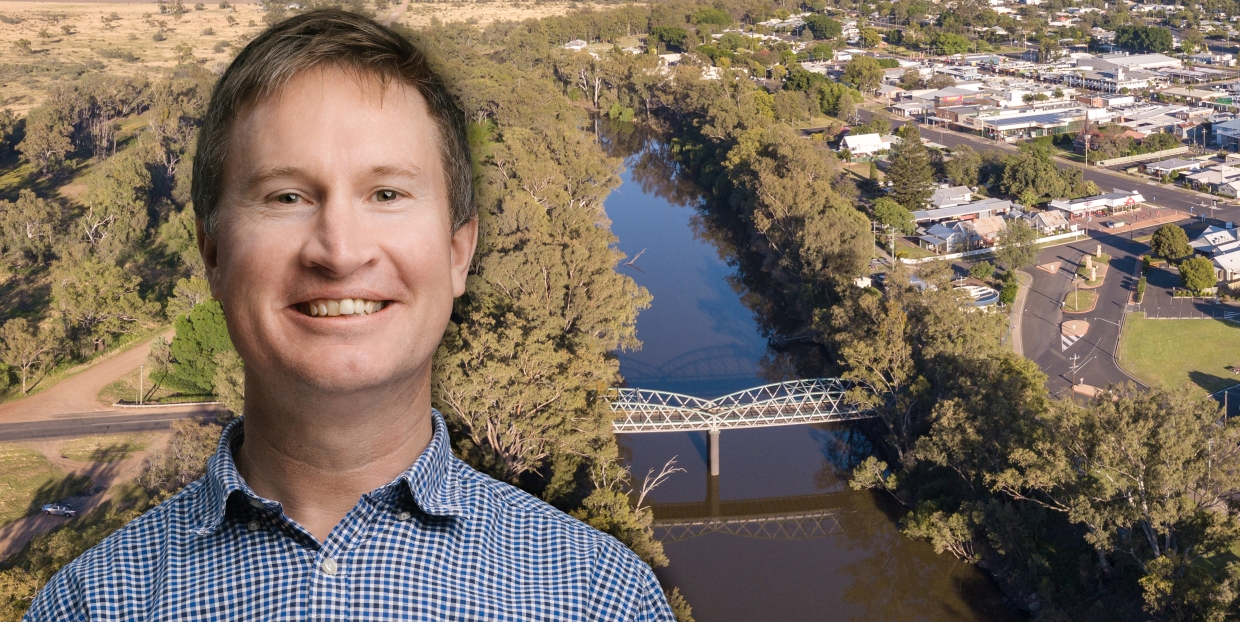
The Balonne River feeds a myriad of smaller rivers and channels that flow over a vast and flat floodplain. This web of distributaries split and reconnect, replenish lakes and wetlands, feed into the Barwon-Darling and support a unique ecology. This is the Lower Balonne River delta, a system driven by periods of boom and bust, floods and dryness.
The people of the Lower Balonne live within the confines of the systems extreme variability, but even so it is home to floodplain grazing, large-scale irrigation, multiple First Nations communities and several regional centres.
Those who call the Lower Balonne home have been living in the confines of its boom and bust cycles for generations or millennia in the case of First Nations communities. So many are well aware of the challenges inherent in providing water for its myriad users, at the same time as maintaining the system’s overall health.
They are also keenly aware that while past attempts to manage the system’s water for multiple outcomes have been important, many fall short during extended dry periods. Historically, water management in the Lower Balonne has been afflicted by low trust between different interest groups and government.
Watertrust’s Lower Balonne Initiative, is an attempt to break the deadlock by trialling different processes of engagement as a means to find practical, workable solutions to the vexed issue of water management in the region.
The Lower Balonne Working Group, formed last year. Its seven members all have deep experience of the river system. They represent landholders and local communities and are a subgroup of the Lower Balonne Roundtable which has been established for seven years.
Guided by Watertrust, the Working Group has been engaging through a deliberative, inclusive and independent process to combine local knowledge with robust science to arrive at genuine, workable solutions. This process utilises modelling to help the Group better understand the cascading impacts of different options they propose.
Recently, in a major milestone for the Initiative, the Lower Balonne Working Group made a submission to the Murray-Darling Basin Plan Review. It includes nine recommendations offering temporary and permanent recovery options for water in the Lower Balonne that would work alongside complementary measures to deliver environmental flows to the system.
Many of these recommendations would help to address issues raised in the recent Inspector General of Water Compliance’s Inquiry into the Northern Basin Toolkit, including a lack of action on building infrastructure.
The submission focuses on practical improvements to the Basin Plan that will allow for better environmental outcomes in an ephemeral river system like the Lower Balonne. These changes will also have positive social, cultural and economic outcomes with better water security for towns and stock, the replenishment of important cultural sites and new income sources.
The Lower Balonne Working Group are proactive and practical in seeking solutions to the Basin’s complex and often fraught water challenges. They are affected when water management fails, and witnesses to the stress of the system on which they depend.
Having made a submission to the Murray Darling Basin Plan Review the next stage for Watertrust Australia, along with the Lower Balonne Working Group, is to broaden engagement with other interests in the region. Moving forward the Initiative will set its sites on long-term solutions that build on the Working Group’s nine recommendations.
If you would like to know more, call Mike 0409 969 936.
Read our newsletter here or join our mailing list now to stay up to date with the latest news from Watertrust Australia.