
Putting the Lower Balonne in perspective
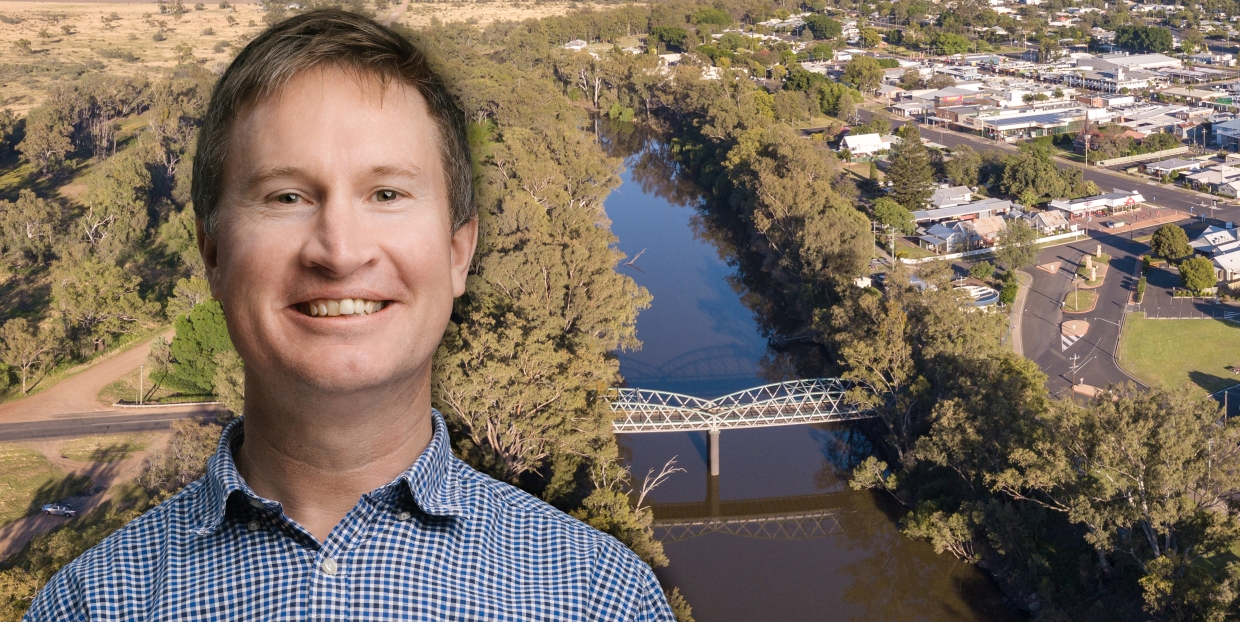
The Lower Balonne is one of those places where the map can mislead you. It only really makes sense when you see it in its entirety and notice how quickly the system changes as you move through it.
Nothing really prepares you for its scale. Until you’re there, it’s hard to picture a system that stretches across such a vast area and still behaves as one connected whole.
And within that scale, the range is striking, from irrigated country to floodplains and wetlands that can feel almost improbable when they’re alive with water. It’s also a landscape with deep cultural meaning, with multiple First Nations groups connected to it.
Each time I visit the Lower Balonne, it looks a little different, depending on where you are in the system and what it’s doing at the time. But the more you see it from north to south, the more the variation makes sense.
This broader view matters, because it helps explain why people can be looking at the same place and still seem like they’re talking about different things. When it’s understood in fragments, it’s easy for it to turn into a contest between parts, instead of a shared effort to get outcomes that stand up over time.
What I notice most is the strength of connection people have to this place. You hear it in the way communities talk about their river and their country, and you see it in the pride and ownership people carry for the landscape around them.
Some people have a whole-of-system view because their work, their history, or their responsibilities have allowed them to see it that way. Others know their own reach deeply, but understandably don’t have the same sense of how the parts fit together, and that gap can shape what people think is happening and what they think is fair.
No one in the Lower Balonne needs an outsider to tell them what matters, and most people know their part of the landscape better than I ever will. But it can still help when the system is easier to see end-to-end, because it makes it easier to understand why others are experiencing something different.
If you can help people see the system more fully, you don’t remove disagreement. But you give them a better chance of discussing the real issues, rather than arguing past each other because they’re working from different understandings of what the system is doing.
You also start to notice how much the Lower Balonne defies neat categorisation. Downstream of St George, the system spreads across the floodplain, water takes multiple paths, and the difference between “in river” and “out on country” starts to matter in practical ways.
The ecological story is part of this, even though it’s often talked about as a separate topic. When you understand the system more fully, you see that what happens here can matter well beyond this catchment, whether you’re thinking about wetlands, waterbirds, fish, or the broader health of the Basin.
The cultural story also has that same depth and reach, because this isn’t only a water system, it’s a lived landscape with deep meaning. Places like the Narran Lakes carry their own significance, and First Nations connection has to be understood as part of the picture, in a way that works for Traditional Owners rather than being treated as an add-on.
Once you start seeing the Lower Balonne end-to-end, you start noticing how hard it is to explain it to someone who hasn’t been there. This isn’t anyone’s ‘fault’; it’s just the nature of a system like this.
The challenge is finding a way to talk about the Lower Balonne that does justice to what it is. If we can’t do that in a clear, usable way, it’s easy for the conversation to slip back into fragments.
This is where I know Watertrust has a useful role. Not by telling people what to think, but by helping make the story of the Lower Balonne clearer and more usable, so that good information is easier to understand and pass on.
This matters for communities throughout the system, because it will help people locate their own experience in the bigger story. It matters for people outside the system too, because it is hard to make good decisions about a place you only understand in slices.
There’s also a practical opportunity here, because there continues to be a lot of knowledge being built through monitoring, research, and lived experience. The challenge is not always the absence of information; it’s making it easier for people to make sense of it.
This work is already underway in the Lower Balonne, and it’ll only become more important as the climate changes and demands on the system change with it. Done well, it will help us start from a shared understanding as we work through what comes next for the Lower Balonne.
And some good news: Lindsay White has joined Watertrust as a Program Manager, bringing some deep, on-ground water management experience and a really strong focus on collaboration and practical knowledge-sharing.
If you would like to know more, call Mike 0409 969 936
Read our newsletter here or join our mailing list now to stay up to date with the latest news from Watertrust Australia.